
Broomfield County Probate Records
Broomfield probate matters are handled by District Court, not by a separate local probate court. Colorado Judicial Branch probate self-help covers personal representatives, decedent estate administration, trust registrations and actions, and guardianships or conservatorships. Outside Denver, District Court judges and some magistrates hear probate matters. Broomfield filings go through Broomfield Combined Courts because Broomfield is in the 17th Judicial District.
Venue depends on the decedent and property. Estate paperwork is filed in the District Court for the county where the decedent lived. If the decedent lived outside Colorado but owned Colorado property, filing can be in any Colorado county where the property is located. For Broomfield residents or Broomfield property, the local court clerk is the practical starting point.
Probate records can overlap with other offices. Recorded documents, property instruments, and older land history may involve the City and County Clerk and Recorder, while probate case files, letters, petitions, and court orders are court records. Broomfield became a county in 2001, so older historical records may require Adams, Boulder, Jefferson, or Weld depending on the former county location.
Probate Terms Defined
Probate records use terms that are specific but not hard to decode. These definitions help distinguish estate administration from guardianship and conservatorship matters.
- Testator
- A person who made a will.
- Executor
- A person named to carry out a will; Colorado materials also use personal representative.
- Intestate
- Dying without a valid will, which means estate distribution follows legal rules rather than the will.
- Guardianship
- A court case about personal care and decision-making for a minor or incapacitated adult.
- Conservatorship
- A court case about financial management for a protected person.
Search Broomfield County Probate Records
The main probate access channel is the Colorado Judicial Branch Record/Document Request Form. Select Broomfield County, choose Probate as the case type, and request the needed document. The form includes probate document options such as Letters, Will, Trust, Application, Petition, Closing, Claims, Date of Death, and Register of Action. CoCourts is not the main probate path because its FAQ says probate case types are not included.
- Gather the case number if known, the decedent or party name, and the approximate filing year.
- Use the state court record request form and choose Broomfield County as the location.
- Select Probate as the case type and identify the requested documents, such as Letters, Will, Trust, Application, Petition, Closing, Claims, or Date of Death.
- Mark certified or exemplified copies if the probate record must be used for legal or financial purposes.
- Contact Broomfield Combined Courts if the case is older, restricted, missing from online channels, or tied to protected information.
Probate requests may require identity checks or redactions. The court record request form warns that juvenile and probate records, or documents with protected or confidential information, may require a U.S. government-issued photo ID.
Broomfield Estate Case Process
Colorado estate administration follows a set path before a Broomfield County probate record becomes complete. The estate cannot be opened until at least 120 hours, or five days, after death. Venue comes next: file where the decedent lived, or if the decedent lived outside Colorado, in any Colorado county where the decedent owned property. For a Broomfield resident, that points to Broomfield District Court.
- Decide whether the estate is informal or formal probate.
- File the application or petition and required forms in Broomfield District Court if venue is proper.
- Seek appointment of the personal representative and issuance of Letters.
- Give required notices to heirs, devisees, creditors, and interested persons.
- Inventory estate assets, pay valid debts and claims, handle taxes, manage property, and distribute remaining assets.
- File closing documents or a final accounting when administration is complete.
Informal probate is usually registrar-reviewed and normally has no hearing. Formal probate requires court review and a hearing, often when there are questions about will validity, heirs, disputes, or appointment. Guardianship and conservatorship matters can follow different forms because they focus on a living person's care, decision-making, or finances.
Broomfield Probate Court Contact
There is one local state court contact for Broomfield probate filings. Broomfield Combined Courts houses the District Court and County Court functions for Broomfield County. The Clerk of Court records unit can be reached by phone or email, and mail goes to the same Descombes Drive court address.
Broomfield District Court
17 Descombes Drive
Broomfield, CO 80020
303-464-5020
Clerk: 7:30-11:30 a.m. and 12:30-4:30 p.m.
District Court is also the local venue for domestic relations, juvenile, mental health, and other broad case types, which is why some probate-related access limits can resemble family or protected-person record limits.
Broomfield Probate Record Fees
The research file did not locate a Broomfield-specific probate filing fee schedule. The documented fees below are the Colorado Judicial Branch court record copy and certification fees used when requesting probate copies through the court record process.
| Item | Amount |
|---|---|
| Copy per page | $0.25 |
| Maximum copy fee for parties and attorneys in their case | $15.00 |
| Certified or exemplified copy per document | $20.00 |
| Name search | $5.00 |
| Off-site case file retrieval | Actual cost |
| Research/redaction after first hour | $30.00 per hour in 15-minute increments |
Filing fees should be verified with the court before filing because the official Broomfield research source did not provide a probate filing amount.
Copy fees apply after the record is located. If a request requires extra review, protected-information screening, or redaction after the first hour, the court research and redaction rate may apply in 15-minute increments.
What Broomfield Probate Records Show
Broomfield County probate records may show the application or petition, will, trust filing, letters, claims, closing documents, date of death, personal representative details, court orders, inventory, accountings, and interested persons. A Register of Action can provide a case summary, but copies of specific documents must be requested from the court when available.
| Field | Type | Required | Notes |
|---|---|---|---|
| Case Number | Text | No | Useful if known. |
| Case Type | Dropdown | No | Select Probate. |
| County/location | Dropdown | No | Select Broomfield County. |
| Year filed | Dropdown | No | The form allows broad years, but Broomfield County records are practically post-2001. |
| Party Information | Textarea | Yes | Decedent, petitioner, personal representative, ward, or protected person if applicable. |
| Probate document options | Checkboxes | No | Letters, Will, Trust, Application, Petition, Closing, Claims, Date of Death. |
Historical searches need extra care. Broomfield County became Colorado's 64th county on November 15, 2001, after a three-year transition following statewide approval of Amendment C. Before that, the Broomfield area spanned Adams, Boulder, Jefferson, and Weld counties. A probate file, land record, or estate-related property document from before county creation may be filed under one of those predecessor counties instead of Broomfield.
Restricted Broomfield Probate Records
Probate is generally a court matter, but not every probate document is an ordinary public record. Guardianship and conservatorship cases can contain medical, capacity, minor, and financial information. Juvenile-related records and protected identifiers may be restricted, redacted, or withheld. Court requests may require government photo ID, party status, attorney status, or a court order.
Colorado public access rules also affect probate records. The Judicial Branch access guide explains that court records are open subject to court rules, chief justice directives, orders, and protected categories. Colorado's public records policy favors reasonable inspection unless law provides otherwise, while sealing and confidentiality rules limit access to some records.
The Colorado sealing statute source is relevant where probate questions overlap with protected or sealed court material.
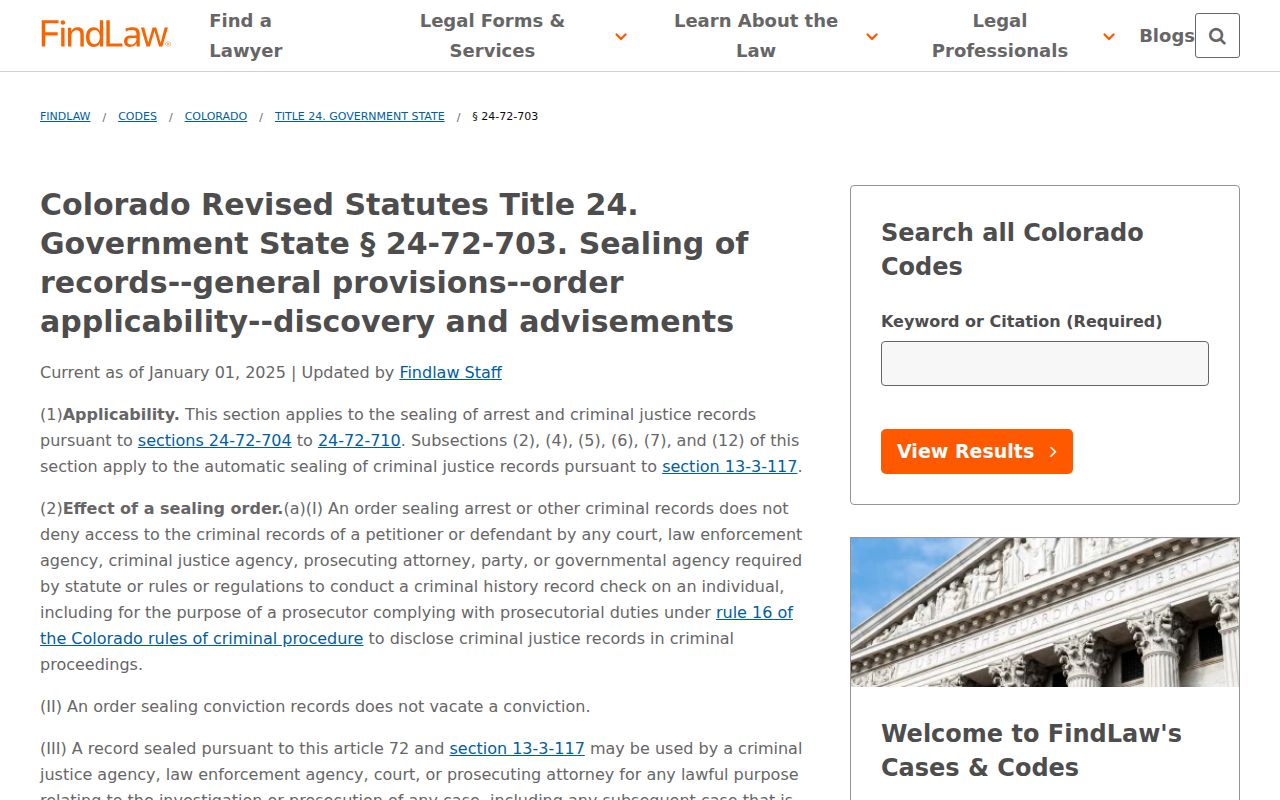
The sealing source is included to show that court access can change when a record is legally sealed or restricted.
The Colorado public records policy statute states the broader open-records policy that still has legal exceptions.
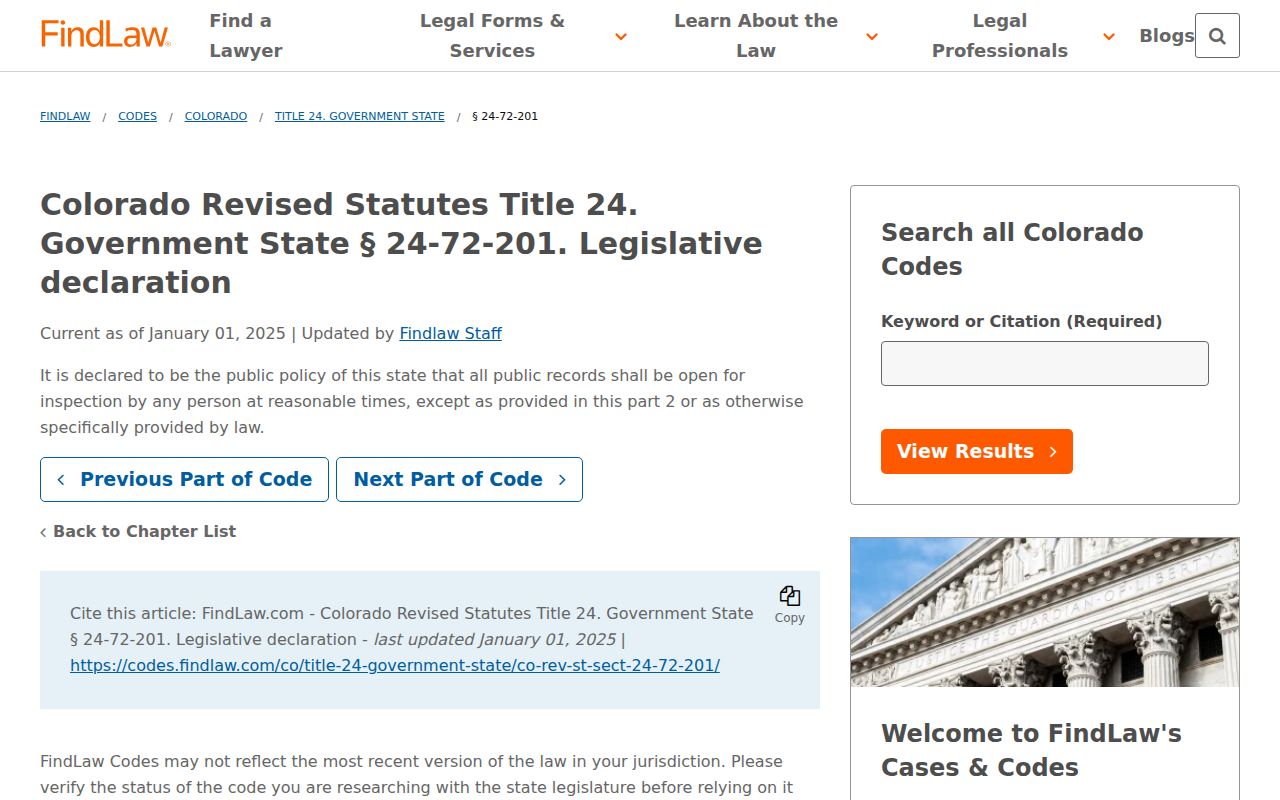
The public-records source belongs with probate access because probate files may be partly open and partly protected.
The U.S. Court of Appeals for the Tenth Circuit is not the local probate court, but it is part of the broader appellate setting for federal issues arising in Colorado.
The federal appellate image is included because the manifest assigns it to probate records, though ordinary Broomfield estate files remain District Court matters.
Note: Pre-2001 historical probate or property-linked research may require Adams, Boulder, Jefferson, or Weld records rather than Broomfield records.